2026 Economic Outlook: Federal Reserve Projects 2.5% GDP Growth
Anúncios
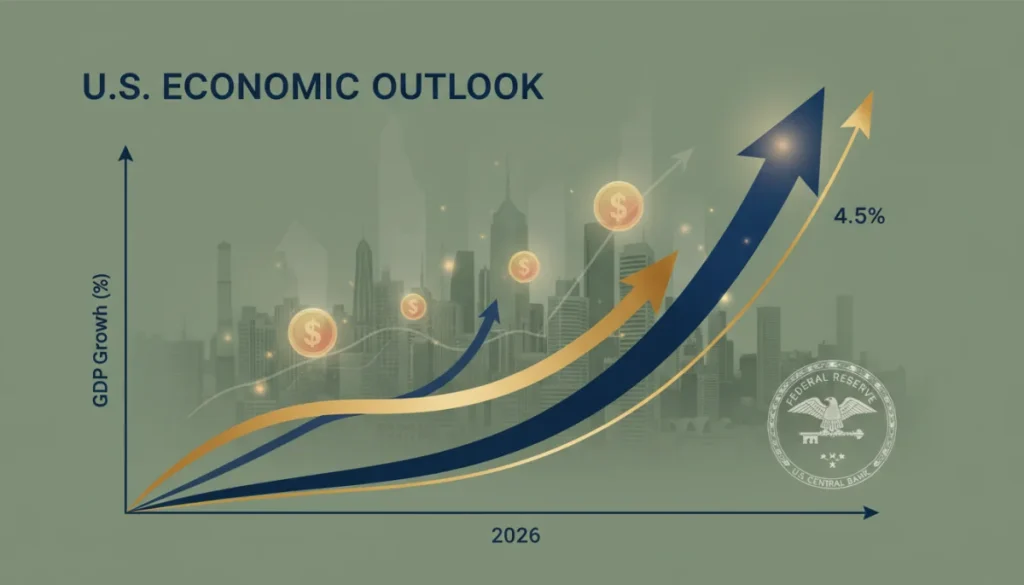
The 2026 Economic Outlook from the Federal Reserve projects a 2.5% GDP growth for the United States, navigating persistent inflation concerns.
The economic landscape of the United States is constantly evolving, and understanding its trajectory is crucial for businesses, policymakers, and everyday citizens. As we look towards the future, the 2026 Economic Outlook: Federal Reserve Projects 2.5% GDP Growth Amidst Inflation Concerns offers a vital perspective on what lies ahead. This comprehensive analysis delves into the Federal Reserve’s projections, exploring the factors influencing GDP growth and the persistent challenges posed by inflation.
Anúncios
Understanding the Federal Reserve’s 2026 Projections
The Federal Reserve, often referred to as the Fed, plays a pivotal role in shaping the economic narrative of the United States. Their projections for 2026, particularly the anticipated 2.5% GDP growth, provide a benchmark for economic health and future planning. This forecast is not merely a number; it’s a culmination of extensive data analysis, expert insights, and a deep understanding of macroeconomic forces at play.
These projections are critical because they influence everything from government spending to corporate investment strategies and even individual financial decisions. A 2.5% GDP growth suggests a healthy, albeit moderated, expansion, indicating that the economy is expected to continue its recovery and growth trajectory, building on the foundations laid in previous years.
Anúncios
The methodology behind the forecasts
The Fed’s economic forecasts are a product of rigorous statistical models and qualitative assessments. They consider a wide array of indicators, including consumer spending, business investment, government expenditure, and net exports. These elements are then synthesized to paint a comprehensive picture of the economic future.
- Data Collection: Extensive collection of real-time and historical economic data.
- Model Analysis: Application of sophisticated econometric models to identify trends and relationships.
- Expert Consensus: Integration of insights from various economists and regional Fed banks.
- Scenario Planning: Development of multiple scenarios to account for potential uncertainties.
Ultimately, the Federal Reserve’s 2026 projections are a carefully constructed assessment, aiming to provide clarity in an often unpredictable economic environment. While no forecast is infallible, the Fed’s track record and resources make their outlooks highly influential and widely respected.
Drivers of Projected 2.5% GDP Growth
The anticipated 2.5% GDP growth for 2026 is not an arbitrary figure; it’s underpinned by several key economic drivers. Understanding these factors is essential to grasping the full scope of the 2026 Economic Outlook. These drivers suggest a resilient economy, capable of navigating various headwinds while maintaining a positive growth trajectory.
A significant portion of this growth is expected to come from robust domestic demand, fueled by strong consumer spending and business investment. As confidence returns and employment remains stable, households are likely to increase their expenditures, providing a direct boost to economic activity.
Consumer spending and business investment
Consumer spending, which accounts for a substantial portion of the U.S. economy, is expected to remain a primary engine of growth. Factors like a stable job market, wage increases, and potentially easing inflationary pressures could empower consumers to spend more on goods and services, stimulating various sectors.
Business investment is another crucial component. Companies are likely to continue investing in technology, infrastructure, and expansion projects to enhance productivity and meet evolving market demands. This investment creates jobs, boosts innovation, and ultimately contributes to overall GDP growth.
- Technological Advancements: Continued investment in AI, automation, and digital transformation.
- Infrastructure Spending: Government and private sector investment in modernizing infrastructure.
- Labor Market Stability: Low unemployment rates and steady wage growth supporting consumer confidence.
- Supply Chain Resilience: Efforts to diversify and strengthen supply chains, reducing disruptions.
These drivers collectively paint a picture of an economy that is adapting and finding new avenues for expansion. While challenges persist, the underlying strengths of the U.S. economy, particularly in innovation and consumer resilience, are expected to propel this projected growth.
Persistent Inflation Concerns: A Balancing Act
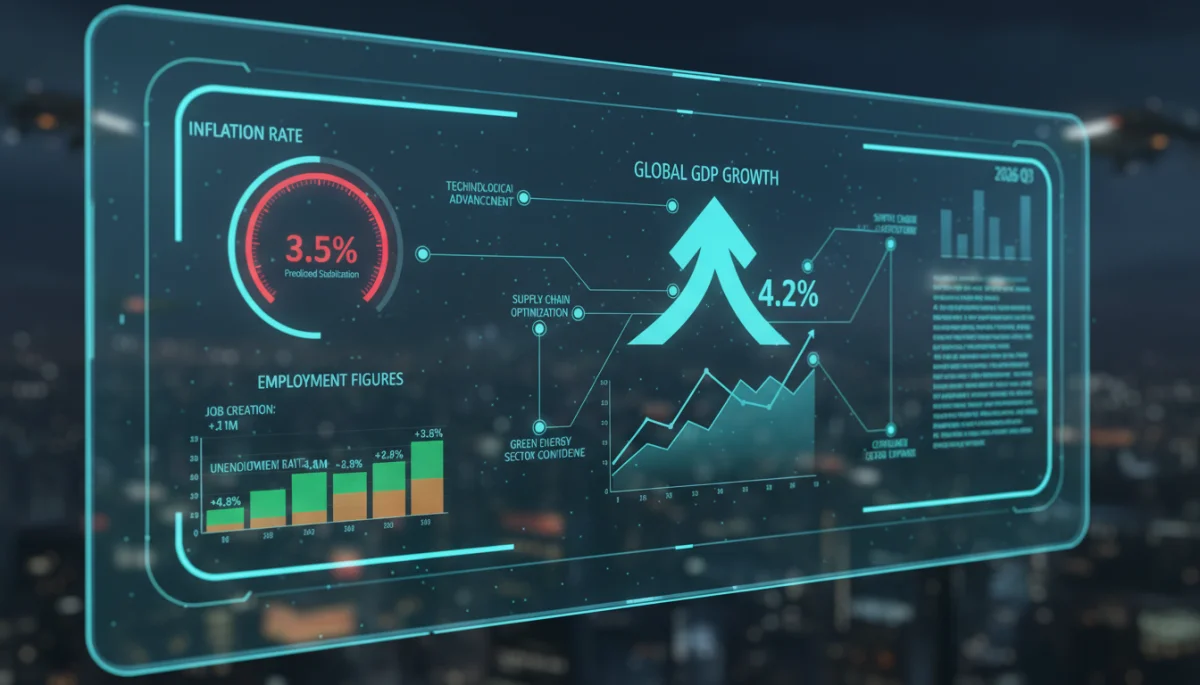
While the 2.5% GDP growth projection offers optimism, the 2026 Economic Outlook is also heavily weighted by persistent inflation concerns. Managing inflation while fostering growth remains the Federal Reserve’s delicate balancing act. High inflation erodes purchasing power, creates economic uncertainty, and can temper the benefits of robust GDP growth.
The sources of inflation are multifaceted, ranging from lingering supply chain issues to geopolitical tensions and strong demand. The Fed’s primary tool for combating inflation is monetary policy, primarily through adjusting interest rates. However, raising rates too aggressively can stifle economic growth, leading to a potential recession.

Federal Reserve’s strategies to combat inflation
The Federal Reserve employs a range of strategies to bring inflation back to its target rate, typically around 2%. These strategies involve careful calibration and continuous monitoring of economic data to ensure that policy adjustments are effective without causing undue harm to the broader economy.
One primary strategy is adjusting the federal funds rate, which influences borrowing costs across the economy. Higher interest rates can cool demand, making it more expensive for businesses to borrow and invest, and for consumers to take out loans. Additionally, the Fed communicates its intentions clearly to guide market expectations, which itself can influence economic behavior.
- Interest Rate Hikes: Gradually increasing the federal funds rate to dampen demand.
- Quantitative Tightening: Reducing the Fed’s balance sheet to withdraw liquidity from the financial system.
- Forward Guidance: Communicating future policy intentions to manage market expectations.
- Inflation Targeting: Maintaining a clear target for inflation to anchor long-term expectations.
The challenge for the Fed is to achieve a ‘soft landing’ – bringing inflation down without triggering a significant economic downturn. This requires astute judgment and adaptability in response to evolving economic conditions. The success of the 2026 Economic Outlook hinges significantly on the Fed’s ability to manage this delicate balance effectively.
Global Economic Factors Influencing the US Outlook
The United States economy does not operate in isolation. Global economic factors play a substantial role in shaping the 2026 Economic Outlook. International trade, geopolitical stability, and the economic health of major trading partners all have ripple effects that can either bolster or hinder domestic growth. Understanding these external influences is crucial for a complete economic picture.
For instance, disruptions in global supply chains, often triggered by international events or natural disasters, can contribute to inflationary pressures and impact the availability of goods. Similarly, economic slowdowns in key export markets can reduce demand for U.S. products, affecting domestic production and employment.
Geopolitical tensions and trade dynamics
Geopolitical tensions, such as conflicts or trade disputes, can introduce significant uncertainty into the global economic environment. These events can disrupt energy markets, reconfigure trade routes, and lead to increased volatility in financial markets, all of which can indirectly affect the U.S. economy.
Trade dynamics, including tariffs, trade agreements, and global demand for U.S. exports, are also critical. A favorable global trade environment can boost U.S. industries and contribute to GDP growth, while protectionist policies or reduced global demand can have the opposite effect.
- Supply Chain Resilience: Global efforts to diversify and strengthen supply networks.
- Energy Market Volatility: Impact of geopolitical events on oil and gas prices.
- International Trade Agreements: Influence of new or revised trade pacts on U.S. businesses.
- Global Economic Growth: Economic health of major trading partners affecting U.S. exports.
The interconnectedness of the global economy means that the 2026 Economic Outlook for the U.S. must always be considered within a broader international context. Monitoring these global factors is as important as tracking domestic indicators for a comprehensive understanding of future economic performance.
Labor Market Trends and Their Impact on Growth
The health of the labor market is a cornerstone of the 2026 Economic Outlook. A strong and dynamic labor market supports consumer spending, drives productivity, and influences inflationary pressures. The Federal Reserve closely monitors employment figures, wage growth, and labor force participation rates as key indicators of economic vitality.
In 2026, a resilient labor market with low unemployment and steady wage growth is expected to continue supporting the projected 2.5% GDP growth. However, challenges such as labor shortages in specific sectors and the ongoing evolution of work patterns, including remote and hybrid models, will also play a significant role.
Wage growth and employment rates
Wage growth is a double-edged sword: it boosts consumer purchasing power but can also contribute to inflationary spirals if it outpaces productivity gains. The Fed aims for a wage growth rate that is sustainable and aligns with its inflation targets, ensuring that workers benefit without overheating the economy.
Employment rates, particularly the unemployment rate, are critical gauges of economic health. A low unemployment rate indicates that businesses are hiring and that there is sufficient demand in the economy. However, an extremely tight labor market can also lead to increased competition for workers, potentially driving up wages and, consequently, prices.
- Skill Gaps: Addressing shortages in specific high-demand industries like technology and healthcare.
- Automation and AI: Impact of new technologies on job creation and displacement.
- Labor Force Participation: Trends in the number of people actively working or seeking employment.
- Gig Economy Expansion: Growth of flexible work arrangements and their economic implications.
The nuances of the labor market will be a critical determinant of the 2026 Economic Outlook. Balancing the need for job creation with the imperative to control inflation requires careful observation and adaptive policy responses from the Federal Reserve.
Potential Risks and Opportunities for 2026
Every economic forecast carries inherent risks and opportunities, and the 2026 Economic Outlook is no exception. While the Federal Reserve projects a positive 2.5% GDP growth, various factors could either derail or accelerate this trajectory. Identifying these potential scenarios is essential for comprehensive economic planning and resilience.
On the risk side, unforeseen global events, persistent supply chain disruptions, or a resurgence of inflationary pressures could challenge the Fed’s ability to maintain a ‘soft landing.’ Domestically, a significant slowdown in consumer spending or business investment could also temper growth expectations.
Emerging technologies and policy shifts
Opportunities, however, are also abundant. Rapid advancements in emerging technologies like artificial intelligence, renewable energy, and biotechnology could unlock new avenues for productivity growth and innovation. These sectors have the potential to attract significant investment and create high-value jobs, contributing substantially to GDP.
Furthermore, strategic policy shifts, such as investments in infrastructure, reforms to foster innovation, or targeted incentives for sustainable industries, could provide additional tailwinds for economic expansion. A stable regulatory environment and clear policy direction can enhance business confidence and encourage long-term investment.
- Technological Breakthroughs: Accelerated adoption of AI and other transformative technologies.
- Green Economy Transition: Investments in renewable energy and sustainable practices.
- Fiscal Policy Effectiveness: Government spending and taxation policies supporting growth.
- Global Economic Stability: A more predictable international environment fostering trade and investment.
Navigating these risks and capitalizing on opportunities will be key to realizing the Federal Reserve’s projected 2.5% GDP growth in the 2026 Economic Outlook. Adaptability and proactive policymaking will be crucial in ensuring a robust and resilient economic future.
The Role of Fiscal Policy in Supporting Growth
While the Federal Reserve manages monetary policy, fiscal policy, enacted by the government, plays an equally crucial role in shaping the 2026 Economic Outlook. Government spending, taxation, and debt management can significantly influence aggregate demand, business investment, and income distribution. The interplay between fiscal and monetary policy is vital for achieving sustainable economic growth and stability.
For instance, targeted government investments in infrastructure, education, or research and development can enhance the economy’s long-term productive capacity. Similarly, tax policies can be designed to incentivize particular behaviors, such as savings, investment, or job creation, all of which contribute to GDP growth.
Government spending and taxation strategies
Government spending can directly boost economic activity, especially during periods of subdued private sector demand. Projects like road construction, public transit improvements, or investments in green energy not only create jobs but also lay the groundwork for future economic efficiency. However, such spending must be managed carefully to avoid excessive debt accumulation or contributing to inflationary pressures.
Taxation strategies are another powerful fiscal tool. Adjustments to corporate or individual income tax rates, as well as specific tax credits or deductions, can influence consumer spending, business profits, and investment decisions. The goal is often to create a tax environment that encourages economic participation and growth without stifling innovation or overburdening citizens.
- Infrastructure Investment: Modernizing transportation, energy, and digital networks.
- Education and Workforce Development: Funding programs to enhance labor skills and productivity.
- Research and Development Incentives: Tax breaks and grants to foster innovation.
- Responsible Debt Management: Balancing necessary spending with long-term fiscal sustainability.
The synchronization of fiscal and monetary policies will be paramount for the 2026 Economic Outlook. Effective coordination between the government and the Federal Reserve can create a more stable and prosperous economic environment, ensuring that the 2.5% GDP growth projection is not only met but potentially exceeded.
| Key Economic Aspect | Brief Description |
|---|---|
| GDP Growth | Federal Reserve projects 2.5% growth, driven by consumer spending and business investment. |
| Inflation Concerns | Persistent challenge, managed by Fed’s monetary policy to achieve a ‘soft landing’. |
| Labor Market | Expected to remain strong, supporting demand but requiring careful wage growth management. |
| Global Factors | Geopolitical stability and trade dynamics significantly influence the US economic trajectory. |
Frequently Asked Questions About the 2026 Economic Outlook
It signifies a healthy, albeit moderated, expansion of the U.S. economy, building on recovery and suggesting continued positive economic activity. This projection is a key indicator for businesses and individuals planning for the future.
Persistent inflation remains a significant concern, potentially eroding purchasing power and creating uncertainty. The Federal Reserve’s primary challenge is to manage inflation effectively without stifling economic growth, aiming for a ‘soft landing’.
Key drivers include robust consumer spending, fueled by a stable job market and wage increases, and strong business investment in technology and infrastructure. These factors are expected to stimulate various sectors of the economy.
Global economic factors, such as international trade, geopolitical stability, and the health of major trading partners, significantly influence the U.S. outlook. Disruptions or positive developments abroad can have ripple effects domestically.
The Fed plans to use monetary policy tools, primarily adjusting interest rates and engaging in quantitative tightening, to bring inflation back to its target rate. Clear communication of policy intentions also helps manage market expectations effectively.
Conclusion
The 2026 Economic Outlook: Federal Reserve Projects 2.5% GDP Growth Amidst Inflation Concerns presents a nuanced view of the United States’ economic future. The projection of 2.5% GDP growth signals a continued expansion, driven by resilient consumer spending and strategic business investments. However, this optimism is tempered by the ongoing challenge of inflation, which the Federal Reserve is diligently working to manage through carefully calibrated monetary policies. The interplay of domestic drivers, global economic forces, and the dynamic labor market will collectively shape the actual trajectory. As we move towards 2026, adaptability, informed policy decisions, and a keen eye on both risks and opportunities will be essential for fostering a stable and prosperous economic environment for all Americans.
